Keyword Domain Names

Keyword domain names are still a thing, even if they are not as popular as they were. By carefully selecting a domain name which has a specific keyword within it, you can more easily rank your website for that chosen keyword. That’s not to say a keyword domain name guarantees you a ranking. It definitely doesn’t. But keyword domain names do appear in the search engine results pages (SERPS), and more so if there’s not much competition.

This website, for example, has been built around the keyword ‘affiliate marketing mentor“. And although there’s not many searches for this particular keyword, there’s not much competition on the SERPS for it either. This means the site has been able to rank on Google for that particular keyword quite quickly and with a relatively small amount of work.

keyword domain names

Keyword Domain Names: Finding Your Keyword

So, building a keyword domain name website can work quite well if you are careful about which keyword/s you go after. If you are trying to rank your website for a very competitive keyword, it will be much more difficult. To find your keyword, it’s a good idea to know what topic you’re going to create a niche website in.

Ideally, you should choose a topic you know something about. That way, you can build a lot of content in it and continue to do so over a long period of time. This will give you more authority with the search engines and you should get some free traffic. You’ll also be able to target long tail keywords in your blog titles which have less competition. These are the keywords which may have less monthly searches, but they will also usually have less competing websites too. This gives you more chance of getting noticed in the rankings.

To find a keyword you want to build a site around, start with your main “seed” keyword. This will depend on your niche, but ideally choose a topic you’re passionate about and find an affiliate product which you can get behind. Type your seed keyword into the Google keyword planner and search through the results, looking for a suitable keyword phrase. Once you find one, you can buy a domain name which contains you phrase.

Keyword Domain Names – How Many Words?

How many words your keyword contains should give you an idea about the relative competition. A two-word key phrase will typically have a lot more competition and be much more difficult to rank for. I would recommend a three or more word keyword combination to build a niche website around.

keyword domain names

The more words you have, the less competition you’ll find. However, you don’t want too many words in your domain name because it will start to look spammy and messy!

Although it might be tempting to aim for a two-word combination in your domain name (because of the larger volume of traffic) there’s a couple of problems with this. Although you’ll see a larger volume of traffic when using Google’s keyword planner (for two-word keywords), there’s little chance of ranking for those terms (depending on your niche of course). Also finding a two-word domain name is difficult, since many of them are already gone. To buy one you’ll be most likely paying above the odds. So look for one which is more affordable and has 3-4 keywords in it.

Choosing A Domain Name

You’ll also need to check whether the domain name you want is actually available. When I came to build this site, I looked initially for “affiliatemarketingmentors.com”.

But the domain wasn’t available so I choose this one instead. Ideally choose a domain which contains your chosen keywords in the first part of the domain name, rather than prefixed by another word. Adding something to the end of your domain name is better than prefixing your keywords with something.

keyword domain names

If your business is international, go for a dot com. If you’re local pick the country you are in. So in the UK where I am, if I had a locally based business it would be a .co.uk.

I use Namecheap.com to buy domain names and they can be picked up for less than $10 a year.

Keyword Domain Names – Keyword Research

The most difficult part of this process is to find a good domain name which is a good match for what you’re going to create. This will depend on a few factors and it’s worth getting all your “ducks lined up” before starting this process. You should decide on your topic for your website according to your interests and the products you’re going to be promoting. If you’re not interested in your subject matter, your site is going to be more difficult to create. See also best blog niche for affiliate marketing.

choosing your blog topic

You also want to choose an affiliate product first before commencing on your site. I tried this process a number of times to no avail before I figured out what I most enjoyed writing about. Once you find your topic and product, it’s much easier to make a success of a keyword domain name site.

Once you’re at this stage, enter your main keyword into Google’s Keyword planner. Look through the results for an appropriate keyword combination. It should already have some traffic to it, and be not too competitive for this to work. Don’t be too greedy and go for the high traffic keywords; they are likely not to rank. But don’t build a site around a keyword which gets no traffic either.

You can look on Google search to see the number of competing webpages for any given keyword. Try first an open search and then try a phrase search with your keyword in quotation marks “like this”.

finding a domain name to buy

Keyword Domain Names – Building Your Site

I’ve written a few posts on building a niche website in which I’ve shared some ideas. To build your site and get it ranking, you need to show the search engines that you are offering some content which is valuable to its end users. Otherwise, your site is unlikely to rank at all. I went through a stage of just throwing up websites which were super thin and had nothing worth reading on them! Needless to say, they didn’t rank and I wasted my time – apart from the valuable lesson it taught me!

To build a niche website and have it ranking, you will want to create some useful content which (ideally) outperforms the others in the niche. Put your main article on the front page of your website and make it as good as you can. Ideally it should be longer than 1000 words. Then build out more posts using other keyword phrases (related to your “seed” keyword phrase) which you have seen during your keyword research.

I use an SEO tool to help me write SEO friendly content on my sites. Checkout that and my other recommended free blog plugins for WordPress.

Summary

I have several keyword domain name websites and have made affiliate sales from some of them. Others haven’t done as well. The key is to keep at it and learn from your experiences. If you can find a topic you enjoy writing in, the best advice I can offer is to zone in on that!

Build a keyword domain name around your chosen topic and build out the site over several months. Your site won’t rank straight away and Google has a sandbox in which it keeps the new websites. Be patient. The more content you put on a new site the better. Google sees this a sign that you are committed to your website. A thinly built website will seldom do very well, even in a low competition niche and with a keyword domain name.

Monetising your site can be done later, although you’ll want to have looked at and chosen a product you can promote which matches your target audience first, before you build your site.

The most profitable digital products to promote are high end coaching courses. However, you should choose a product which fits your niche, so your audience will naturally be interested in what you have to offer.
Content Marketing Blog Strategy

A content marketing blog strategy can be used to drive traffic organically from the search engines. There’s over 600 million blogs on the internet, so getting your content found means doing better or working smarter! Do both! Write better content than the rest and work smarter by finding the “low hanging fruit”. What is the low hanging fruit?

niche blogging

Most blog niches are competitive with the most profitable ones usually being the most competitive. But even in a less competitive niche, you still have competition on Google for the coveted prize of a top listing on the first page. That top listing means a tonne of free traffic and that means more customers for your business. But the most competitive terms to rank for are super difficult to rank for. If a top authority domain has hundreds of thousands of back links and has been around for decades, you’ve little to no chance of beating it to the top of page 1 of Google if it has a listing for that term. So what’s the answer? The answer is to find those keywords which are less competitive than the rest – the “low hanging fruit”.

As your site gains authority with Google, you can start aiming a little higher!

Content Marketing Blog Strategy

This strategy starts with Google’s keyword planner. Type your main keyword into the planner and you’ll find a bunch of related terms which you can write content for. The most popular searches however will reveal those keyword combinations which are also the most competitive. Rather than try and compete with the “big boys” for a listing for a 2-3 word phrase, look instead for the long tail keywords with low SEO difficulty.

These tend to be those keywords which have fewer monthly searches. But still, a small amount of a little traffic is worth more than no traffic from a competitive keyword. Those super competitive keywords look really appealing because they have thousands of monthly searches.

Why not write content for them? The answer is you’ll never rank for those keywords because there’s far too much competition. You’ll end up ranking your content on page 10 of Google if you’re lucky! You may get lucky and rank on Bing or Duckduckgo.com. But those search engines get far less traffic than Google. So even after a lot of work creating content for high competition keywords, your results will be poor in terms of free traffic. Instead, target the long tail keywords which have much less competition because you’ll have a greater chance of a ranking!

Content Marketing Blog Strategy – Finding The Long Tail Keywords

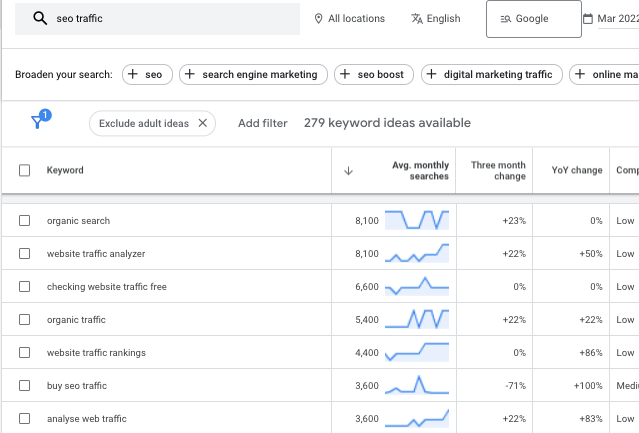
Using Google’s keyword planner, click on the Avg. monthly searches tab (second column along) until you see the numbers drop. Then scroll through the results until you find a suitable keyword. Your keyword should relate to your website (and business) in some way. The results above only get 10 (or less) searches a month, so you can scroll along to find keywords with more traffic.

Generally speaking, the more keywords in the chain, the less competition you’ll find on Google for a particular keyword phrase. You can check on Google (on a desktop/laptop computer) for the number of competing websites for any given term. Simply type the keyword into a normal Google search. Also do a phrase match search with the term in “quotes like this”.

You should see a number appear underneath your search and this number denotes the number of competing websites (or web pages) which rank for this term. This will give you an idea of the relative competition before writing your piece of content.

content marketing blog strategy

Writing With SEO Tools

While you shouldn’t completely write content only for the robots who are looking at your content, you should also keep them in mind too! SEO (search Engine Optimisation) will help you rank your articles and one of the best tools I use is Yoast SEO – an SEO plugin which helps you write SEO friendly content. This free plugin will help you place keywords in your headings, titles, images and throughout your content in the right amounts.

How people perceive your content is another ranking factor with Google. So you should definitely make an effort to write content which is helpful and easily digested by your readers. Make content easily sharable too. If your readers share your content it’s another signal to Google that your content is share-worthy. You can place social media buttons on your website to make this easier to do. See also the best free blog plugins for WordPress for some other free and cheap plugins I use to help my get more people to my content and rank it better on the search engines.

The more people see you content, the more they will share it, like it, link to it and the better this is for your SEO. But of course it all starts with quality content. If people don’t react supportively to your content, they will click away quickly, won’t like, won’t share and won’t link to it. This is all seen by the watchful eye of the Google bots! So make a good job of your content and it should ultimately grow your SEO standing with Google over time.

Content Promotion

Although you’ve spend a heap of time crafting the perfect piece of content, using your SEO tool to optimise for the search engines and you’re ready for a nice nap, your job still isn’t over! Blog promotion is still your job and relying on a first page listing means you’re handing over control of your traffic to someone else.

Although we would like a top listing to get free traffic to our blog, it’s never guaranteed. So promoting your blog is absolutely essential if you want to make the most out of your efforts. You can of course automate some of this with plugins such as Revive Old Posts and Postplanner.com which allow you to syndicate blog posts as they are published via social media.

The faster you get people to your posts, the more data points Google will have to determine how to view your content. So, if your content is rank-worthy, it’s worth doing the promotion yourself.

Summary

Your content marketing blog strategy should include:

  • Keyword research
  • Competitor research
  • SEO tools
  • Quality content creation
  • Content promotion

Even after all of this you’re never guaranteed a top listing on page 1 of Google, so it’s definitely worth going after the less competitive terms. Look at the competition on Google for the terms you choose before attempting them. Make sure you create a good promotion strategy yourself and don’t entirely rely on your ranking. Rankings can take some time to appear too, especially on Google, so don’t be impatient.

The idea is to create top quality content first which will stand the test of time. This gives you the best possible chance of getting your content listed. More listings equals more traffic. More traffic equals more shares, likes and backlinks. This improves SEO and ultimately your site will increase its authority with Google. This lets you target the more competitive keywords terms as you go on and you have a better chance of ranking for them too, if you do the same.

How Many Blog Posts Should I Have Before Launching?

So, “how many blog posts should I have before launching my blog website”? you may be wondering. It can take several months before your new blog/website is ranked on any given search engine. So holding off until you have a certain number of blog posts won’t really help you. In fact, it’s more likely to delay your site getting found. Once you publish your site, it gets indexed by the search engines. This means the search engines have found your content but it doesn’t mean you’ll start ranking for any terms.

how many blog posts should I have before launching

Before your site will get any traffic from the search engines you’ll need to build some trust with them. This can take anywhere from 3-6 months and typically the search engines won’t rank a new site very quickly. If they did, and the site subsequently was taken down, that’s bad for the end user. Since the search engine’s job is to create the best user experience, they want to make sure you’re reliable first, before they start ranking your content.

So, it’s better to launch your site as it is as soon as possible. That way, the search engines can index it, and you can start building your credibility.

How Many Blog Posts Should I Have Before Launching?

So, however many blog posts you have already is the number! Even if that’s none at all! You won’t immediately see a huge number of visitors to your blog when you first launch. Google is the most used search engine and has what’s known as the “sandbox”. This is where they hold new websites for a period of time to asses whether to give them a ranking, or not.

how many blog posts should I have before launching
Your blog before and after launch is like a gas station in the desert! To get visitors you’ll need your site to be ranked, or people won’t find it.

So whenever you launch, your site will be held aside for a period of time which is usually between 3-6 months. During this time you can build your credibility through blogging on a regular basis. Once the search engines see you as a credible site, which is here to stay, they are more likely to give you a ranking (assuming you’re offering some quality content on your site).

So don’t worry about visitors arriving on your website and finding it empty. The likely possibility is that you won’t see many visitors anyway. If you were to launch your site with 30 blog posts on it, the same thing happens; your site is still held and assessed. So you don’t gain any benefit from not having published it before you started writing.

How Many Blog Posts Should I Have Before Launching? Blog Credibility

Depending on the content on your blog, and your competition, you should find within a few months your site starts ranking in the searches. It will usually appear sooner on Bing, Yahoo, and Duckduckgo.com than it will on Google, since Google are sticklers for content and will likely sandbox your blog when it’s first published.

niche blogging

To build up your credibility with the search engines, start creating content and publishing it on your blog as soon as you publish. There’s a few criteria which Google (and others) use to determine the usefulness (and credibility) of your blog:

  • The domain age – how long has your domain been published for?
  • Backlinks – (a new blog won’t have any)
  • Content on the blog – quality and quantity
  • How people interact with your posts

Initially there will be very little activity on your blog, especially if there’s no backlinks and/or content. But a good sign for the search engines is a steady increase in this activity over time. For the best results build high quality content consistently on your blog once you have published it. You should also aim to promote your content too and build backlinks naturally over time. High quality content is the key because over time people should naturally link to your content, share it on social media and so on.

How Often Should You Post New Content?

Ideally make a habit of posting content regularly on your blog, while also promoting older content. You can automate the process of blog post sharing with certain plugins. See best free blog plugins for WordPress. Once your site is indexed by the search engines, they will begin to see your content. As you continue publishing new content, this will have an effect on whether you are ranked or not for certain keywords.

blog traffic

Publishing regularly shows that you are a source of information on your topic which is generally going to be a good thing for your rankings (with quality content). Over time, with good quality content you should attract more visitors and get higher rankings. How quickly this happens will depend on your content, backlinks, and how the search engines perceive your blog.

Summary

So how many blog posts should I have before launching? The answer is to launch right now, today, however many posts you have written. Your site needs to be indexed first and typically won’t rank for months.

This means you won’t start seeing visitors immediately and you’ll need to build some credibility first. To do this, start creating content and keep doing so on a regular basis. Depending on the competition in your topic and your content strategy, you can start seeing rankings appear within a few months.

Holding back on launching your site won’t help you and may even hinder you because when you launch, the search engines are still going to start assessing your site first, before giving you any trust or rankings.

Is blogging profitable? Blogging can be very profitable if you stick with it for long enough. But with over 600 million blogs on the internet you’ve got some serious competition, whatever your niche.

How Many Articles Should A Blog Have?

How many articles should a blog have? Blogging attracts free traffic to a website from the search engines. The more blog posts you have, the more likely you’ll attract a greater volume of traffic. Some SEO experts recommend having at least 20 blog posts on your blog but the more posts you publish the better.

After all, 20 blog posts isn’t many, especially in a competitive niche. In a popular niche, you’ll be competing with other websites who have more content and greater authority with Google. So the more content you have on your site, the better it is. With more content you’re going to attract more visitors, but this also depends on how your content is perceived by the search engines and whether you find any traffic from it.

How Many Articles Should A Blog Have?

blog traffic
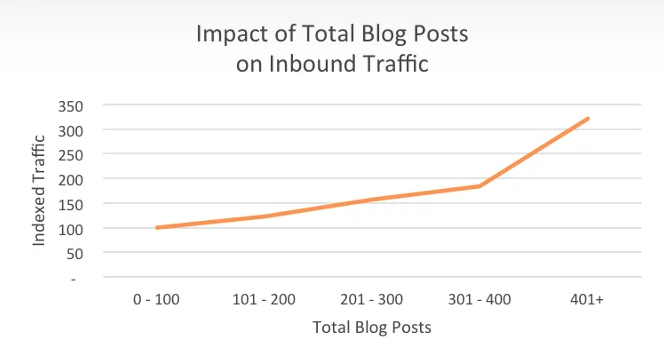
After analysing over 13,500 customers, HubSpot found that blog sites with 400+ published posts received twice as much traffic as those with 301-400. 

In the graph above you can see that traffic has an “uptick” once your blog posts exceeds a certain amount. In this case it’s beyond 400 blog posts. If you have less than 100 blog posts, you’ll likely see less traffic (from the search engines) than those with more. But it also depends on your blogging frequency, the age of your website, backlinks and the quality of your content, too. In a more competitive niche, you’re going to need to create more content because there’s more other websites competing in search for the terms you seek to rank for.

It’s totally possible too, to create a lot of content and it not really help your SEO. This is particularly true in a very competitive topic.

How Many Articles Should A Blog Have? – More Than You Think

Blogging is most definitely a slow strategy to improve your SEO (Search Engine Optimisation) over the longer term. Over time, as you continue to post new and relevant content in your niche, the search engines will rank your content accordingly.

A newer site will typically take a while to appear in the search engines results pages (SERPS). This can be between 3-6 months. If you only publish 10-20 posts and then stop, this is a signal to the search engines which will affect your ability to rank for your chosen terms.

A site which publishes continuously about a topic will likely do much better then than one with only a few blog posts. So ideally, make a habit out of publishing blog posts if you’re serious about growing your readership from the search engines and getting free traffic.

Targeting Keywords In Your Blog Posts

To get your posts ranking more prominently on the search engine results pages, and more quickly, you can focus your attention on writing for the long tail keywords which have fewer results on the SERPS. This can give you more chance of getting traffic because there’s less competition in the search engines results pages. This is a pretty useful tactic especially if you’re in a competitive niche. To find long tail keywords with low SEO difficulty, you can use Google’s keyword planner.

niche blogging

Type in your main keyword and look for the long tail keywords which typically have fewer monthly searches. These keywords have fewer monthly searches than the more competitive keywords. You may think this means less traffic. However, a little bit of traffic from fewer monthly searches, is worth more than no traffic from a competitive keyword.

With a two word keyword phrase, for example, you have very little chance of getting an article listed on the first page of Google. But with a five-word keyword phrase, there’s less competition. This means you have a much greater chance of landing that first page listing, should you decide to create content around that phrase.

Summary

How many articles should a blog have? Bloggers create content so that they will attract visitors from the search engines results pages (SERPS). The more posts you have, the greater your potential to attract website traffic for free. However, there’s a catch.

There’s other bloggers who are writing similar posts to yours. Google (and the other search engines) want to provide the best experience to their users. So they’re not going to rank any old content on their results pages. You need to therefore provide the best quality content if you’re going to have a chance of ranking it and getting free traffic.

A few posts will help you in a general way with your SEO – Search Engine Optimisation. But if your intention is to create free traffic, you’ll want more posts (and of better quality) than your competition. Generally speaking in this scenario, the more posts you write the better. Google will see you as more of an authority in your niche, and reward you with more first page listings.

Content Driven SEO

Content driven SEO (that’s Search Engine Optimisation) is a great way to attract free traffic to a website. In the bid to “get rankings” it can be easy to forget that you’re writing for people, not robots! So if you focus too much on the technical aspects of SEO – that is, keyword percentages, for example, or backlinks, you can forget to create content which is useful and valuable to your readers. Your content will appear robotic and this puts visitors off.

content driven seo

Since Google uses robots to look at your content, they will pretty much guess if you’re writing only for the robots. How people interact with your content says a lot about your website. Are you writing only for the rankings, using SEO as your primary driver, or are you putting out valuable information which is actually of use to people?

Content driven SEO is the latter and although there’s various SEO tactics and strategies which will work, putting the visitor first is a good recipe for longevity and good SEO growth.

Content Driven SEO – Sales Vs. Information

It can be tempting to only focus on those keywords which attract people to your products. Those keywords which indicate that someone is ready to buy are your “golden tickets” to more sales. Product reviews or keyword searches with “buy” in the string are pretty good indicators that someone is looking to make a purchase! But focus only on these ideas and you’ll miss another opportunity – that is, getting your site ranked as an information site in your niche.

Although information sites typically attract a different audience, the information itself will attract more traffic and often traffic which is easier to obtain through SEO than your buyer keywords.

There’s a number of main SEO points which Google uses to recognise your content and give you a ranking (or not):

  • Content on your page (and your niche)
  • How people interact with that content – do they click away or read through?
  • Backlinks – how many and where from?
  • Domain age
  • Plus many more

The content on your site is the biggest factor in all of these since it affects everything else. People won’t link to content which isn’t useful, nor read content which doesn’t help them. These two signals alone should make you consider the value you’re providing in your content.

With better content more people will rate your site, link to it and share it. These are further signals to Google that you’re providing some kind of value. They will rank your content accordingly. This gives you greater readership and the cycle continues – more shares, likes and links, better rankings more readership. This is the cycle you want to get to with your content. Provide shoddy content with no value to your readers and you’re only feeding the robots!

Finding Long Tail Keywords

In almost every niche only there’s a lot of competition and this is a huge factor in whether or not you can rank your content and get free traffic. Trying to rank for the most competitive terms will likely result in disappointment. Your content won’t get ranked. Those terms are also typically the ones which will bring in the buyer traffic too, which is a shame but that’s just the way things are!

niche blogging

An alternative strategy is to find long tail keywords with low SEO difficulty. Long tail keywords are those which are 3 or more terms within a keyword chain. The longer the keyword chain, the less competition you’ll have for ranking on Google for that specific term. These terms may not be your “best” keywords for your “perfect” customer avatar. However, focusing on the “low hanging fruit” of keywords is a good basis for an SEO strategy which can ultimately bring you free traffic.

Writing for visitors with the aim of delivering value in your content can have a dramatic effect on your SEO over time.

Pre-made Affiliate Websites

You can find pre-made affiliate websites on sites such as Flippa.com, Empireflippers.com, FEInternational.com and BuySellEmpire.com. Depending on what you invest, you can find a suitable solution according to your budget and there’s plenty of affiliate websites to choose from.

premade affiliate websites

More expensive sites obviously will pay more and you can pay from around $400 to tens (or hundreds) of thousands to purchase an affiliate site which is already making money. Cheaper sites will be less profitable, (or not profitable at all), so make sure you do your due diligence before investing in a website.

If you’re looking for a cheaper site, it’s probably worth thinking about what value you can add to an affiliate site which is only making a small amount in monthly commissions. For example, can you write blog posts on it, or learn some other marketing techniques to help increase the profitability of a site you buy?

Pre-Made Affiliate Websites – Alternatives

Alternatively you can purchase an affiliate website or drop shipping website from Shopify. Shopify is a portal you can use to create a “from scratch” affiliate website or a drop shipping site.

There’s a monthly free to use the platform and you’ll need to advertise it too. Although your monthly fee will likely only be a fraction of what you’ll pay for an existing (and profitable) affiliate site, you’ll be left with the job of marketing your website if you want any visitors to it. Without visitors (traffic) your site won’t be profitable.

pre made affiliate websites

Still, Shopify might be a solution if you’re on a budget and have the time to build out your site and choose affiliate products to put in it. The building of an affiliate site isn’t the most difficult aspect though and Shopify will help you create a site which has the potential to be profitable – with products and services you can sell.

A simple Amazon plugin for example will let you promote products from Amazon on your site. You only need to join Amazon’s affiliate program and start placing products in your digital store!

Pre-Made Affiliate Websites – Affiliate Programs With “Plug & Play” Software

Another alternative to buying premade affiliate websites is to join a program which gives you access to “plug and play” website setup. Again, much like Shopify, this lets you set up a website and sales funnel which has affiliate products on your site automatically.

With a good high ticket product range and subscription affiliate products to sell, this can be one of the best alternatives if you don’t have a large budget to buy an existing affiliate site which is already profitable. The benefit of using a high ticket product range is simple:

  • You can learn online marketing techniques with less risk – selling low value physical products with paid marketing can become costly and it’s much more difficult to turn a profit.
  • It’s easier to scale a high ticket product sales funnel once you have found a marketing strategy which works.

If you choose a Shopify store and put low value products in your digital shop (such as Amazon products), you still need to market your store to get people to find it! This can be tough if you only have low value affiliate products to offer. See also low ticket vs high ticket affiliate marketing.

Watch this video for more on this strategy.

A High Ticket Sales Funnel

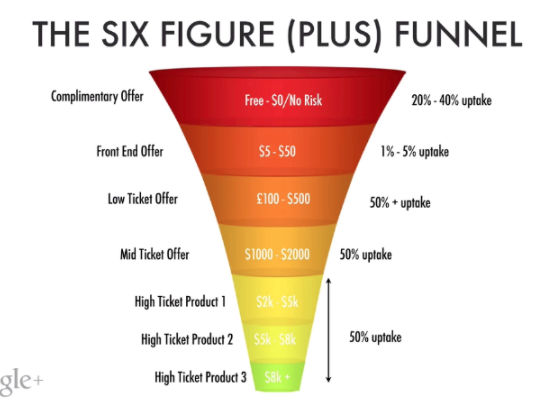
You can also use a high ticket sales funnel and learn how to market it. This is a cheaper option than purchasing a pre-made affiliate website which is profitable. A high ticket sales funnel allows affiliates to earn the highest level of commission from sales of digital affiliate products. Here’s a quick overview of what your sales funnel will look like:

high ticket funnel

A high ticket funnel contains multiple products which you can profit from including entry level, mid ticket and high ticket products. It allows an affiliate to earn the most from their email list and set up a business from scratch and learn marketing. You can also get training and support in terms of your ongoing learning and development.

With this option you’ll be in charge of learning how to market your business too. Without a marketing engine driving traffic to your offer, you won’t have any traffic.

Access this video to learn more and get started.

Summary

Premade affiliate websites can be found on websites such as Flippa.com but they come at a cost. Highly profitable sites are likely to be hundreds of thousands of dollars to buy. Cheaper sites won’t be as profitable and you can find some mid-way point which is suitable for you.

An alternative is to subscribe to a platform such as Shopify. Shopify lets you build an e-commerce platform for a monthly fee which you can monetise with affiliate products. But you’ll be in charge of getting visitors to your site. Many a would-be affiliate purchases such a site hoping it will be instantly profitable. It won’t. You also need to learn marketing, which is why it’s a good idea (if you go this route) to get some training on your marketing strategy first.

Another alternative is to use a training and education platform which gives you everything you need to start an online business from scratch:

  • Software, websites and products ready made – simply set up by following the step by step instructions
  • Training and support in learning a marketing strategy – again, you’re in charge of bringing people to your website and/or landing page and getting leads.
  • Automated software helps you make sales and deliver emails to customers (pre-formatted for simplicity).

Learn more and get access here.

How Does Affiliate Marketing Work Step By Step

So how does affiliate marketing work step by step? Affiliate marketing is a business model in which third parties get paid for referring customers to products online. When someone buys an affiliate product through the affiliate’s link, the sale is tracked back to them and they earn a commission based on the sale.

So how does this process work, what do affiliates do to make sales and how can you do it too? Here’s a bit more about this process from start to finish.

How Does Affiliate Marketing Work Step By Step – Joining An Affiliate Program

joining an affiliate program

Before you can earn from promoting affiliate products online, you need to join an affiliate program. There’s many affiliate programs available online and many affiliates get their start by joining Amazon’s partner program. Amazon is a popular platform because so many people are comfortable buying from the website, even though Amazon’s commission structure is pretty low.

affiliate marketing

Once you have signed up to an affiliate program, you’ll be able to promote products through a unique link known as the affiliate link. The affiliate link tracks back sales you have made and rewards you with a percentage of the sale. Amazon affiliates can link to any product from the vast array of items on the site. Click on the site stripe to collect your unique affiliate link (pointing to any given product).

how does affiliate marketing work step by step

Once you have that link, you can paste it anywhere online in order to get people to click on it with the intention of buying a specific product. This works the same with any affiliate program. You’ll be able to access a dashboard in the associates program and collect links which point to specific products.

Affiliates need to learn how to promote those links in order to make sales. No sales equals no commissions. Affiliate marketing is a performance based business model. As such, you need to make these sales if you are to make any money!

How Does Affiliate Marketing Work Step By Step – Product Promotion

There’s many ways in which you can promote your affiliate link as an affiliate marketer. Here’s a few of the most popular methods of product promotion:

  • Blogging
  • Video Blogging
  • PPC – pay per click advertising
  • Email marketing
  • Social media marketing – both paid and unpaid.

The huge variety of promotion methods means you can get creative with how you promote affiliate products. Many affiliates will stick with a specific strategy until they are successful, rather than spread themselves too thin by jumping from one to another.

This gives them time to learn a strategy really well. Some strategies are faster than others and more easily scalable. Paid marketing methods, for example, can be set up and going within a matter of hours. Whereas blogging can take much longer in order to gain traction and is less easily scalable. Let’s have a look at some of these marketing strategies in a little more detail. Since I’m a fan of blogging, we’ll start there!

How Does Affiliate Marketing Work Step By Step – Your Target Audience

When it comes to blogging you’ll need to be pretty patient because it can take some time before your blog gets the notice needed to sell your products on a regular basis. Before you set about building a blog, you need to choose a topic. Your choice of topic is pretty important, especially if you’re going to be creating content on a blog. Ideally choose a topic you’re familiar with or want to learn about. That way, you can continue blogging for a long period of time.

target audience for affiliate marketing

You also need to align your affiliate products with your blog topic. If you don’t get this right, your visitors won’t be interested in your products. For example, if your blog is about cars, don’t try and sell dishwashers from it! You would want a car related product which appeals to your audience.

Your target audience is the section of the online marketplace who are most likely to be interested in your affiliate product. So when they land on your content, they are likely to buy. A good example of a well targeting piece of content is a review for some kind of product. A review website works well for affiliates because it attracts the very people who are interested in a specific product. So when they land on your site, they can easily click on your affiliate link and buy it! Read more about target audience and customer avatar here.

Video Blogging

Video blogging works in a similar way to blogging. You can create and upload multiple videos which somehow relate to your affiliate product. Then link to your product (with your affiliate link) in each video in the description. With a large volume of videos on YouTube, for example, you will start to attract some passive visitors who are looking for your particular type of content.

affiliate marketing landing pages

YouTube is the second largest search engine on the internet after Google. But even so, it’s hugely competitive, especially for free traffic. So you’ll need to create a lot of content to start getting your videos found.

This is of course similar for bloggers. There’s over 600 million blogs on the internet, so plenty of competition. You can of course run paid advertising on Google, or on YouTube too, but this will incur greater expenditure than content creation. Paid advertising is a much faster way to drive traffic though, so if you don’t have the patience for content creation, this could be the way to go for you.

PPC – Pay Per Click Advertising

With pay per click, you can target your potential customers with any given advertising platform:

  • YouTube (Adwords)
  • Google Adwords
  • Facebook
  • Bing
  • etc.

Many affiliates will start with Bing.com because it offers cheap search advertising where affiliates can specify the keywords which are triggering their ads.

how does affiliate marketing work step by step

Bing also tends to be easier to get going with than Adwords, which has more checks and balances for affiliates, which can make it more difficult to access if you’re new. If you’re interested in learning more about using paid marketing as an affiliate, you can join a mentorship program here which offers products, training and support.

It’s a good idea to send paid traffic to a landing page, rather than a blog, for example. This is because on a blog, your visitors can look around and click through your content. This means your advertising budget won’t get very far and most of your visitors will eventually click away, having not taken any action on your blog. Send them to a landing page instead and you can collect their email address. This allows you to follow up with them over a much longer timescale via email marketing.

Email Marketing

Email marketing is one of the best ways to make affiliate marketing profitable. With email marketing, you collect emails from a landing page and follow up with your subscribers by sending email messages – helping them with a specific problem.

how does affiliate marketing work step by step

You can then promote your affiliate products via email, by using your affiliate links in the text. With email marketing, affiliates build up an email data base of hundreds of thousands of subscribers which they can promote products and services to.

Social Media Marketing

Many affiliates will promote their affiliate links through their social media profiles. To do this effectively, you need to place a clear call to action on your profile page with some offer or giveaway.

Then you need to find people who are likely to want what you have on offer. You can do this in various ways. On Facebook, for example, you can join various groups and interact with people who have certain interests. Over time, and if you make a habit out of this, people will come and look at your profile.

Learn more about unpaid social media marketing strategies here.

Summary

Ideally as an affiliate you should work at a particular strategy until you have mastered it! When you can make affiliate sales consistently, you’ve probably spent a good deal of time learning a particular strategy. However, initially there’s a lot of learning to be done.

This initial phase of being an affiliate can be quite frustrating because you’ve yet to make a sale online. This is perhaps why so many affiliates drop out. But if you can stick at it long enough to break through and make your first sale, you can make many more. You can ultimately learn how to make sales in your sleep!

Here’s the quick version of how affiliates make sales step by step:

  • Join an affiliate program – choose products carefully according to your promotion method
  • Promote your affiliate link by studying a promotion method for at least a few months
  • Once you make a sale, continue with that strategy until sales come in more regularly.
  • Scale up if you can – if using PPC (paid ads), this is much easier, if blogging, create more content

How Long Does It Take To Earn From A Blog?

How long does it take to earn from a blog? There’s over 600 million blogs on the internet and you’ll find competition in every niche. The busier niches will be harder to get traction in, and so it will take considerably longer in a competitive niche. Pick a low competition niche, and it can be more difficult to monetise, even with a large amount of visitors.

A new blogger can make a sale quite quickly, if they are lucky. But to earn consistently from a blog, you need a consistent amount of visitors who are making purchases from you regularly. You can of course monetise a blog with advertising too. But ad clicks only earn tiny amounts so you’ll likely need to generate a huge amount of traffic to make this consistently profitable and worth your while. See affiliate marketing vs Google Adsense.

Whatever you choose to do to monetise a blog, you’ll never be profitable without traffic. So let’s look at traffic generation first since it’s so important.

How Long Does It Take To Earn From A Blog? Traffic

You can get traffic instantly if you pay for it. But that’s not the point of blogging. The point of blogging, if you want money from it, is to generate free traffic. Once you get enough free traffic and you can successfully turn that traffic into leads and sales, you can start earning from a blog. There’s two main elements here: Free traffic and sales! You can’t make sales without traffic, but you can still have traffic without sales! So traffic is the key if you want to make money from blogging.

There’s targeted traffic and general traffic too. As an affiliate marketer, I want targeted traffic. Targeted traffic is traffic I have specifically focused on to optimise for leads and sales. These are visitors who are more likely to be interested in the products I promote on this site. Since most visitors on a website don’t buy from you, it pays to get more of the traffic which will convert.

How Long Does It Take To Earn From A Blog

To get traffic to your blog takes time. Depending on your niche it can take months or years. But you can speed this process up if you find long tail keywords with low SEO competition. These are the “low hanging fruit” of keywords which relate to your product and are easier to get ranked for on the SERPS (Search Engine Results Pages).

You can also build a niche website too. This can help you get more traffic from the SERPS if you choose a niche and build a website around specific keywords.

How long does traffic generation take? If you’re blogging regularly and promoting your blog posts, you can start to see visitors quite quickly. But stop and they will quickly die off. Maintain consistency for several months and you should see your visitor numbers growing consistently too.

How Long Does It Take To Earn From A Blog? – Monetising Your Blog

Of course all this traffic is no good without somehow monetising it. You can either use advertising or affiliate marketing and I would suggest testing out both to see what works for you and your topic. Ad clicks only bring in tiny revenues and I personally found affiliate marketing to be the better bet. This means you need to align your blog topic with some affiliate offer which you feel is a good choice. It needs to be a good match for your blog topic, or your readers won’t be very interested in it.

With high ticket affiliate products and subscription affiliate products you stand to earn a lot more per sale compared to standard products. So your choice of affiliate product is pretty important.

You can also offer something on your site as a freebie giveaway. Offer this in exchange for your visitor’s email address. By building an email list, you can make more of the traffic you get. Even with a small amount of traffic, it’s worth doing this because you can start to build a data base of subscribers to send messages to and build a relationship with. Ultimately this list is used to sell affiliate products.

Earning From A Blog – Cart Before The Horse

Don’t put the cart before the horse when it comes to earning from a blog it’s easy to get over excited and rush in creating content and hoping for a sale. But the truth is, it’s very competitive out there and if you don’t sustain the necessary traffic, you won’t make consistent sales. A “one off” sale is encouraging, but you can pay your rent from it! You ultimately want a consistent income from blogging which can be built upon over time. The best way to approach blogging is therefore to first find your niche.

How Long Does It Take To Earn From A Blog?

Finding your niche is the most important decision because your whole blog will be built on this decision. If your decision is flawed in some way, you’re building a skyscraper on the foundations of a cottage! Ideally choose a topic you love and have a huge passion for. Otherwise, it can be difficult to sustain the effort needed to go the extra mile. With blogging, expect to be creating content for several months if not years.

If you can’t see yourself doing this in your given subject area, it might not be the right one.

Summary

Nobody can tell you exactly how long it will take you to earn from a blog. Get clear on how much you want to earn. Will it be a hobby job or do you want to replace a full time income? Once you know this, it will help you to realise what is needed to create a consistently profitable blogging habit. Are you ready to write posts and promote them over the next year consistently? Or, are you just wanting a side hustle which you can only give a few hours a week to?

In any case, blogging is unlikely to be profitable for the first few months while you find your feet. Google’s sandbox means you’ll be unlikely to rank on the first page in the SERPS – search engine results pages. But there’s still other search engines and your own promotion on social media.

With the right attitude, there’s no reason you can make a good income from blogging. But be prepared to roll your sleeves up and stick with it, even when there’s nothing to show for it for some time. When you love blogging, you’re much more likely to do this and stick with it. But when you’re only looking for the outcome, it can be difficult to sustain, especially if you’ve chosen a topic you don’t care about!

See also how to earn money from a blog.

High Ticket Recurring Affiliate Programs

With high ticket recurring affiliate programs, you can get a lot more bang for your buck! With most affiliate products you only get paid once. So you need to keep selling the product again and again to make anywhere near a half decent income. But with a high ticket program which offers subscription products within a single product range, you get the best of both worlds: high ticket and subscription products. That means high payouts and recurring commissions!

high ticket funnel

What are high ticket affiliate marketing products? A high ticket product is one which typically generates $500+ in commission. These kinds of products can be either digital or physical products. Since physical products pay lower rates of commission (typically between 1% and 10%), you’ll need a higher valued physical product to pay out the same as lower valued digital product.

For example, a physical product valued at $10,000, paying 10% will pay out $1000 in commission. To earn $1000 in commission with a digital product (which pays 30%) you only need a product worth a third the cost of the same paying physical product ($3333.33).

This makes high ticket digital products a much more viable business model when it comes to affiliate marketing. Not only do you earn a larger percentage of the sale, but more people are likely to buy because it’s more affordable. With certain business courses and education products it’s also a more desirable product than a high valued toy, for example. There’s a greater need for it than a $10k physical product.

High Ticket Recurring Affiliate Programs – Subscriptions

Subscription affiliate products too offer the best value for affiliates. With a subscription product of great value, you can earn for years from each customer, steadily building your customer base while each customer gives you a recurring monthly commission.

recurring commission programs

Products such as business tools, software, plugins and autoresponders are some of the best subscription products you can promote as an affiliate. Training courses, mentorships and communities are also incredibly valuable.

When someone buys a business training course which is linked to their income, they will definitely keep their subscriptions active, particularly when they start earning from them.

When you can use a sales funnel and product range which offers both high ticket digital products and subscription products, you’re gearing your affiliate business in the best way possible. Especially if you have multiple products to offer existing customers.

High Ticket Recurring Affiliate Programs – Coaching & Mentoring Programs

Mentors offers a high ticket recurring affiliate program which includes multiple products, built in sales team and subscription products. You can also choose your level of buy-in according to your needs. Each product in the range offers an increasingly more personal level of support and the more expensive products offer more “done for you” solutions when it comes to building an online business from scratch.

high ticket recurring affiliate programs
Watch this video to learn more.

Higher levels of commission are also offered to those who have purchased the products themselves and wish to promote them. Have a look at the commission structure for some of the higher valued products in the range and learn more in this video.

high ticket recurring affiliate programs

As you can see, products in the range offer commissions of up to $4000 at the highest level (see picture below). As an affiliate it makes a lot of sense to promote a product range rather than a single product. With a product range, you can sell more products to each customer you refer.

commission structure launch you

Plus, you have more chance of selling to more people because you offer a range which suits more people’s needs. With only a high ticket product, you can only sell to those who can afford them.

But with a range of products including low ticket, mid ticket and high ticket, you can offer products which are accessible to a larger audience. Here’s a few of the lower valued products within the range. These also include subscription products from which you can earn recurring commissions.

high ticket recurring affiliate programs

Learn more about this product range and how to promote these kinds of products in this video.

Summary

While there’s thousands of affiliate products available to promote online, many of them pay peanuts. Your choice of affiliate product is probably one of the biggest decisions you can make when considering building an affiliate marketing business.

Low value physical products will likely pay tiny commissions and this means you’ll need to sell in bulk to make them pay. This can be tough with the growing competition online and cost of advertising.

But with a high ticket program, it’s easier to use paid marketing because you stand to recoup budget more quickly with high ticket products. Once you start selling too, your recurring commissions can grow steadily and your affiliate business can take over from your regular income quite rapidly, especially when using paid marketing strategies, which are much harder to balance with low paying affiliate offers.

The ideal affiliate business offers both high ticket and recurring commissions. Learn more and get started here.

High Ticket Affiliate Marketing Examples

Looking for a few high ticket affiliate marketing examples? I found a high ticket affiliate marketing product back in 2014. It was the shift I needed in my affiliate business. Before then, I struggled with affiliate marketing for a couple of years. I promoted low valued products from Amazon and eBay and because I knew the sites I thought it was the only way to do it.

high ticket affiliate marketing examples

Then I discovered Clickbank and started promoting digital products. But it wasn’t until I found a high ticket product that things really changed. A high ticket product can pay you upwards of $500 in commission per sale. Previously, the most I had made was a measly $40 for a digital product sale, or even less from selling physical products. Hardly worth it!

But I didn’t know that back then. You don’t know what you don’t know!

High Ticket Affiliate Marketing – What Is High Ticket?

A high ticket affiliate product is typically worth $500 in commission to the affiliate and carries a much larger price tag than most affiliate products. This is good obviously for affiliates who can sell them for a couple of reasons:

  • It means you can be profitable with fewer sales than your typical affiliate products, whether physical or digital
  • It’s also much easier to learn (paid) marketing when you can make sudden large leaps forward in your commission payouts
high ticket affiliate marketing examples
Checkout the flying hovercraft on this site!

With low value products, when you’re starting out as an affiliate, it’s much more difficult to learn how to run profitable paid adverts. If you only make $40 per sale, you have only a small amount of “play” with your advertising costs. But if you make $400 per sale, it means you can test and measure advertising campaigns with greater confidence and less risk. When you do make a sale, it’s more likely to cover your costs and make a profit. With a low value offer, this is more difficult.

High Ticket Affiliate Marketing Examples:

Here’s a couple of examples of high ticket affiliate products you can find on a site called Hammacher Schlemmer. It sells several high ticket physical products and pays affiliates 8% for the sale. With physical products commissions tend to be lower than digital ones. But if you find high priced products like these, you can make huge commissions even with a low percentage of the sale:

high ticket affiliate marketing examples

If you sold the Amphibious Sub-Surface Watercraft for example, at $300,000, you would earn $24,000 in commissions. The Killer Whale Submarine sells for $90,000 and you’d earn a commission payment of $7,200.

There’s other products on the site too which pay out nice, large commissions. Here’s a few other examples of items I found in the toys section priced over $500:

high ticket affiliate marketing examples

I particularly like the monster truck for $185,000! Selling one of these would mean a commission payout of $14,800.

While these kinds of products may not sell in bulk like many Amazon items, for example, a single sale would mean the same in commissions as selling thousands of a low valued product. It pays to work smart as an affiliate!

High Ticket Digital Product Examples

Digital products carry much larger commissions than physical ones do. Typically a physical product pays between 1% and 10% commission to affiliates. With digital products you can make between 30% and 40%. Digital products don’t have delivery, handling and shipping fees so they can pass this saving on to the affiliate.

This means if you sell high ticket digital products, you stand to make even more than with some high ticket physical products. With digital products too, you have larger reach because anyone with a laptop can access them. Some physical products will have certain international restrictions due to cost of delivery and the location of the manufacturers. But a digital product can be accessed from anywhere without any delivery ramifications. This makes them perfect for affiliates to sell globally.

Here’s a few digital training courses (with commission structure) which you can access here.

high ticket digital products

Training, coaching and education programs are often some of the most profitable products affiliate can sell. With a good high ticket sales funnel, and built in sales team, you can refer customers to entry level products and have higher ticket items sold on your behalf if you use a good program. Access this online business training program here.

using a high ticket business system

Summary

There’s a few high ticket affiliate marketing examples for you! High ticket products aren’t the only things to consider as an affiliate either. It’s also worth having some subscription affiliate products up your sleeve too!

With subscription products you can earn ongoing commissions from previous sales. With the right products and services, and the right customers, you can earn ongoing commissions on a recurring basis for years if the customer is a good fit. Business products and tools are good ones to choose because they are essential for the running and operating of certain businesses.

To get started with an online business using high ticket and subscription products checkout this video from one of my personal mentors Stuart.